
Electric car pros and cons | Auto E
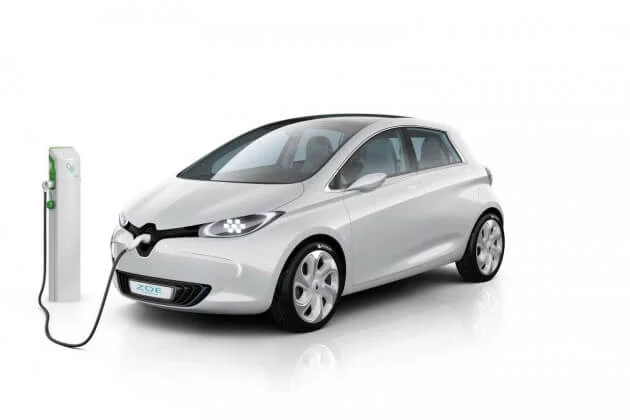
Electric car pros and cons
Electric cars are steadily gaining market share. They are popular, but not prevailing. Why? Because they have both pros and cons. So, let’s find out what these pros and cons are.
Electric car pros
Low charging costs
Electric cars take less money out of your pocket to empower than petrol cars. You can spend just £3 – 4 per 100 miles with an EV while fueling your engine-driven vehicle will cost you £11 – 12 per the same 100 miles. Thus, your savings is £7 – 9 per 100 miles. Impressive!
Low maintenance costs
Electric vehicles don’t have an engine with all its complicated details. You don’t have to change engine oil every 6,000 miles, replace a timing belt every 60,000 miles. Thus, with an EV, you can enjoy good maintenance savings.
Easy charging
It is very easy to charge a vehicle. You can feed it while you are shopping in malls, dining at café and restaurant, or working. You can charge your car even while you are sleeping. Well, can you do this with a petrol car?
Besides, modern stations avail a variety of connectors, so you can easily find one you need. Moreover, some stations such as, for example, our charge complex 1 and our charge complex 2, have long charging cables. So, they enable to feed a few cars simultaneously.
Low environment footprint
Electric cars don’t use fuel and, thus, do not load the environment with tailpipe emissions. This is a very positive impact that results in global warming halt. Moreover, using these zero-emission vehicles helps to make the air in the cities cleaner and reduce the number of respiratory disease cases.
Government support
The UK government actively supports those who go green. They avail grants for purchasing low- emission vehicles as well as for purchasing and installing charging stations. Also, EV owners are exempt from the congestion charge when driving within central London.
Electric car cons
High price
Perhaps the main drawback of an electric car is its price. When comparing to purchasing a petrol car its initial investment is around 50% higher. For example, while the price for brand-new petrol Volkswagen Golf starts from £20,300, Volkswagen Golf GTE will cost you at least £31,500.
Short range
The EV range is 120 – 200 miles. We do not take Tesla into account, of course. Its counterpart, a car with a gasoline engine, has a range of at least 600 miles and some models enable you to drive 1,100 miles if you fuel them in full.
Long charging time
How much time does it take to fuel a petrol car in full? A couple of minutes. However, charging an EV battery in full takes at least 36 – 40 minutes if you use a rapid charging station. The difference is 8 – 10 times. And this difference is not in the electric car favour.
However, these drawbacks are well-balanced with benefits and promise to disappear in the future:
- Fuel and maintenance savings offset higher price;
- EV manufacturers constantly increase battery capacity and, thus, an EV range;
- EV charging technology is constantly evolving and charging time is reducing.
At Auto-E, we also contribute to making the charging process easier and quicker by constantly improving our charging station performance. If you need a reliable charging station, you can order it from us at an affordable price.