
How to choose a home EV charger in 2026: power, cable, smart features and price
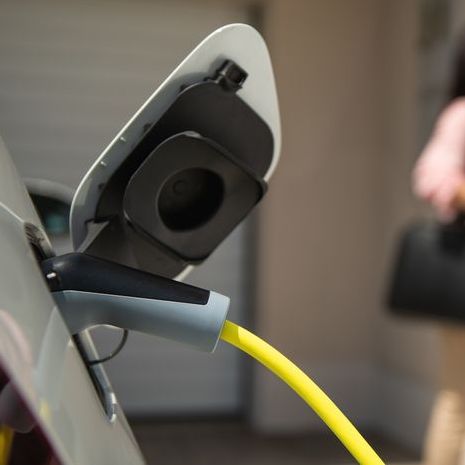
How to choose a home EV charger in 2026: power, cable, smart features and price
There are more home charge points on the UK market than ever, and most of them will charge your car perfectly well. The differences that matter are about how you live: where you park, which car you drive today and might drive next, whether you have solar panels, and how much you care about an app. Here is how we help our customers choose – without the jargon.
1. Power: 7 kW is right for almost everyone
A 7 kW single-phase charger adds roughly 25–30 miles of range per hour and fills even a large 80 kWh battery overnight. Every EV on sale accepts it. A 22 kW charger needs a three-phase supply, which most UK homes do not have (upgrading costs £3,000–£10,000), and many cars can only take 7 or 11 kW AC anyway. Choose 22 kW only if you already have three-phase power and a car that uses it, or you are future-proofing a new build. Curious about faster options? Read about our fast home charger installation.
2. Tethered or untethered
- Tethered – the cable is permanently attached. Quicker to use every day, nothing to fetch from the boot, but tied to one connector type and cable length (typically 5–7.5 m).
- Untethered (socketed) – you use your own cable. Neater on the wall, works with Type 1 and Type 2 cars, and you can choose the cable length. Slightly less convenient, and the cable can be stolen if left plugged in.
Every new EV sold in Europe uses Type 2, so a tethered Type 2 unit is a safe choice for most households; if you own an older Type 1 car (Nissan Leaf, Mitsubishi Outlander PHEV) go untethered.
3. Smart features that are actually useful
Since 2022 UK regulations require new home charge points to be "smart", so scheduling and app control are standard. What separates a good unit from a basic one:
- Tariff-aware scheduling – set it once and the charger runs in your off-peak window (7–10p per kWh on EV tariffs, versus about 26p standard).
- Solar integration – a CT clamp lets the charger use only your excess solar generation, or top up from the grid when needed.
- Load management – the charger drops its power when the shower or oven is on, avoiding a costly supply upgrade.
- Reliable connectivity – Wi-Fi is fine if the signal reaches your parking spot; otherwise choose a unit with Ethernet or built-in 4G.
- Open standards (OCPP) – so the charger can be moved to another back-office if the manufacturer's app is discontinued.
4. Safety and installation quality
Look for a unit with built-in 6 mA DC leakage detection (saves the cost of a Type B RCD) and, ideally, PEN-fault protection so no earth rod is needed. Then choose the installer as carefully as the box: the installation must be on a dedicated circuit, notified to your DNO, and certified. Cheap installations skip these steps – read why professional installation matters.
5. Warranty and support
A charger lives outdoors for ten years. Insist on a minimum three-year warranty, a UK-based support line and – this is often overlooked – a manufacturer that also repairs. Auto E designs and builds its own units in the UK and runs a home charger repair service, so parts and engineers are available for the life of the product.
6. What a fair price looks like in 2026
A quality 7 kW smart charger costs £450–£900 for the unit; fully installed in London expect £900–£1,200 for a straightforward job, up to £1,800 if your consumer unit or earthing needs work. If you rent, live in a flat, or only have on-street parking with an approved cross-pavement channel, the government's chargepoint grant now contributes up to £500. See our full London installation cost guide.
Our recommendation
For most London households: a 7 kW tethered Type 2 smart charger with solar/load-management capability, installed on a dedicated circuit by an accredited electrician, with a three-year warranty and local support. That is precisely what our home charging range is designed to be. Not sure which model suits you? Try our charger selection wizard or send us a message and we will talk it through.