
EV charging cable – safety first!
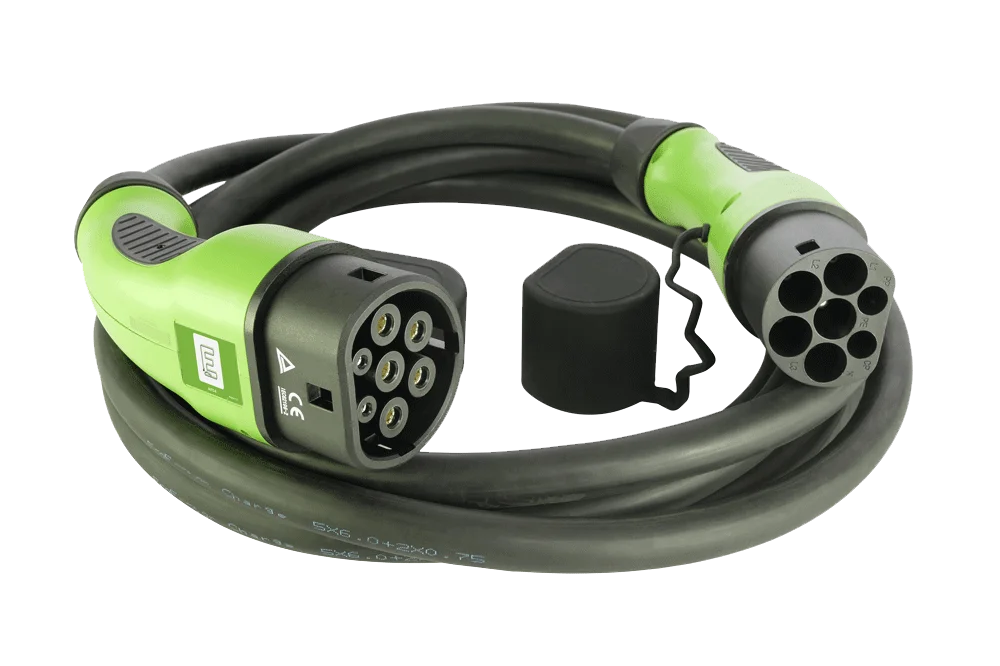
EV charging cable – safety first!
Dealing with electricity always requires much consideration. And charging your electric car is not an exception. At Auto E, we prepared five tips to ensure your safety when charging your EV.
Use only certified charging equipment
Certification guarantees the cable is tested and conforms with the electrical safety standards. In other words, certified cables pose minimum risks of electrocution.
Avoid using an extension lead
Using an extension lead increases the risk of electrocution either on the charge end or right in its socket. Also, domestic extension leads are not a good fit for outdoor use. To clarify, unlike portable charge cables, domestic extension leads aren’t weatherproof.
For example, it is risky to use this device at temperatures below 5°C. Because it doesn’t withstand low temperatures. Moreover, typically, an extension lead is not waterproof. Thus, using it while it is raining is a true way to get an electric shock.
We recommend choosing an EV charging cable of extended length to reduce the need for an extension lead.
Never ‘daisy-chain’ extension leads
This is a standard tip for electrical safety. So, this is valuable advice for EV-charging purpose as well. Indeed, the risks and hazards we described earlier for using the extension lead multiply with ‘daisy-chaining’.
Moreover, ‘daisy-chaining’ poses another risk – the risk of having to deal with loose sockets and more failure points. Thus, plugging one extension lead into another threatens your safety even more fierce.
Never use damaged charging cable
Here, we speak about both the cord and connector. If the cord sheath has any scuffs or fraying, it fails to protect you from getting an electric shock. Any scorching on the connector is a telltale sing the cable is unsafe to use.
At Auto E, we recommend the following two-step practice:
- check the charging cable integrity every time before using it
- replace your EV charge cable at least every 4-5 years
Keep the charge end covered with a rubber cover when not in use
Especially if the cable is connected to electricity on the other side. To clarify, energized cable pins pose a risk of electrocution from accidental contact. With a rubber cover on the charge end, you can ensure no accidental contact is possible.
Besides, a cover serves as reliable protection against dust and debris getting on the connector pins. To clarify, dust and debris buildups block the plug way.
So, this is in your best interest to keep the charge end covered and pin clean.