
EV Charger Repair Cost UK 2026: Call-Out Fees, Parts and When Replacement Wins
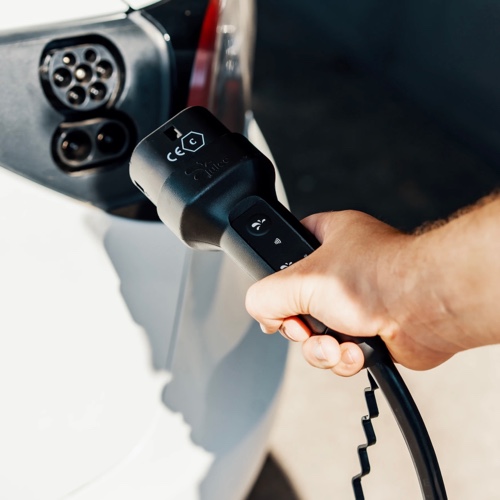
A charger that suddenly shows a red light, trips the consumer unit or refuses to talk to the app is one of the more irritating EV problems, mainly because nobody knows what the fix will cost until someone opens the lid. This guide sets out what UK repair visits typically cost in 2026, which faults are cheap and which are not, how warranty and "installer gone bust" situations work, and when a new unit (with a £500 grant where you qualify) is the better spend.
\n\nHow EV charger repairs are priced in the UK
\nMost independent EV engineers work on a two-tier model: a diagnostic call-out that covers travel and roughly the first hour of testing, then parts and any extra labour on top once the fault is confirmed. Because a "dead" charger can be anything from a tripped RCBO to a failed control board, very few reputable firms will quote a fixed repair price before they have tested the unit. Auto E works the same way for anything unusual: our engineers repair chargers of any brand and quote after diagnosis, so the figures below are market ranges, not Auto E prices.
There is one important exception. On many of the home units we are called out to, we can commit to a fixed all-in repair price of around £400 including VAT and parts - agreed before an engineer is booked, covering the visit, the diagnosis, the labour, the parts and the testing. If the job turns out to be bigger than expected, that is our risk rather than yours. Whether we can offer it depends on the station: we need to be able to source parts for that model, the fault has to be in the charger rather than in your property wiring, and replacement has to not be the more sensible answer. We tell you which of the two you are getting up front. There is a full explanation, with photographs of a real burnt socket, in our guide to home EV charger repair.
\n\nTypical UK market ranges in 2026
\nThe table shows indicative ranges published by UK repair firms. Actual prices vary by region, access, VAT treatment and the make of charger.
\n| Item | Typical UK market range | Notes |
|---|---|---|
| Diagnostic call-out (travel + first hour of testing) | £90 to £150 | Often credited against the repair if you go ahead |
| Circuit and protection faults (RCD/RCBO, MCB, loose terminations) | Usually within £200 to £350 all in | Parts are cheap; labour and testing dominate |
| Contactor or relay replacement | Usually within £200 to £350 all in | A common wear item on older units |
| Comms module, Wi-Fi/4G or RFID board | Usually within £200 to £350 all in | Depends on parts availability from the maker |
| Tethered cable and plug replacement | £180 to £280 parts and labour | Some brands need a whole-unit swap instead |
| Main control board | Quoted per job | Manufacturer part; can approach the price of a new unit if out of warranty |
| DC power module (rapid chargers) | Roughly £1,000 to £3,000 per module | Specialist workshops can often refurbish rather than replace |
| Annual preventative service | £100 to £150 | Recommended once the warranty ends |
| Replacement 7 kW home unit, supplied and fitted (London) | £900 to £1,200 | Less £500 grant if eligible; wiring already in place can lower this |
Treat these as typical UK market ranges only. For any specific job we quote after a free site survey or a diagnostic visit.
\n\nWhat moves the price
\n- \n
- Where the fault is. Anything in the circuit, protective devices, contactor or cable is usually the cheap end. Anything on the main board is where costs climb. \n
- Parts availability. Big brands keep spares; some discontinued or imported units have none, which forces a replacement. \n
- Access and location. A wall box in a garage is quicker to test than a bollard in a car park with buried supply cables. \n
- Whether the earthing needs work. Older installations without PEN-fault protection may need an upgrade before the charger can safely be put back into service. \n
Common faults and what they usually mean
\n- \n
- RCD or RCBO keeps tripping. Frequently DC leakage from the car's on-board charger reaching a protective device that cannot handle it. BS 7671 requires either a Type B RCD or a Type A RCD with 6 mA DC detection on EV circuits, so an incorrectly specified device is a classic cause. Damaged cable insulation and shared circuits also trip RCDs. \n
- Earth or PEN-fault errors. UK chargers on PME supplies monitor for a lost neutral and shut down for safety. Persistent errors point at earthing arrangements or high earth-neutral voltage from the network, not always the charger. \n
- Charger not communicating with the car. Damaged Type 2 pins, a corroded plug or a control-pilot fault; occasionally the car is at fault. \n
- Offline or app problems. A comms module, router change or expired SIM. Charging often still works in "dumb" mode. \n
- Clicking but no charge. A worn contactor is a likely suspect. \n
- Dead unit, no lights. Could be as simple as a tripped breaker, or as serious as a failed board. \n
Never open the casing yourself. Beyond the obvious shock risk, breaking the tamper seal or using an unapproved installer can void the manufacturer's warranty. If you have a domestic unit, our home EV charger repair service covers diagnostics and fixes on any brand across London and the South East.
\n\nWarranty vs out of warranty
\nMany home chargers carry a three-year manufacturer warranty (Auto E stations come with a 3-year warranty). Inside that period, hardware faults should go back to the manufacturer or its approved network first, and the labour to fit a warranty part may or may not be included, so ask before booking. Outside warranty you pay for parts and labour, and the repair-or-replace maths starts to matter. Faulty control boards in particular are treated by manufacturers as their own repair item, so if the maker no longer supports the model, replacement is often the only realistic route.
\n\nWhat if the installer has gone bust?
\nYou are not tied to whoever fitted the charger. Any competent EV-qualified electrician can diagnose, repair and recertify it. If the unit is still under manufacturer warranty, contact the manufacturer directly rather than the defunct installer. If it is out of warranty, or the manufacturer itself has disappeared, an independent charge point repair service can usually source generic parts (contactors, RCDs, cables) even when brand-specific boards are unavailable.
\n\nRepair or replace: how to decide
\nA well-made AC charger should last around eight to ten years. In 2026 several things tip the balance towards replacement sooner:
\n- \n
- Board failure out of warranty, especially on a discontinued model with no spares. \n
- Repeat call-outs. Two diagnostic visits plus a part can already exceed half the cost of a new unit. \n
- The £500 grant. From 1 April 2026 the EV chargepoint grant covers 75% of supply and installation up to £500 per socket for renters, flat owners, households with on-street parking using approved cross-pavement solutions, and landlords (up to 200 sockets). Repairs are not grant-eligible; a new installation can be. \n
- Existing wiring. If the dedicated circuit and earthing are sound, swapping the wall box is quicker and cheaper than the original install. \n
- Features you now need: smart scheduling for 7-10p/kWh off-peak tariffs, solar matching, or 22 kW where the supply allows. \n
As a rule of thumb, if the repair quote is more than around half the cost of a new unit installed (net of any grant), replacement usually wins. See our home charging stations, which start at £1,449 ex VAT for a 22 kW single-socket unit with a 3-year warranty, or use the charger wizard to shortlist options.
\n\nCommercial and rapid chargers
\nFor workplaces, hotels and car parks the sums are bigger and downtime costs money. The Public Charge Point Regulations 2023 require 99% reliability on public rapid chargers, so operators typically run maintenance contracts rather than pay per call-out. On DC units the power modules are the expensive line, but specialist UK workshops now refurbish modules rather than replace them. If a bank of AC units is beyond economic repair, the Workplace Charging Scheme pays 75% up to £500 per socket (up to 40 sockets) on new installations until 31 March 2027, and businesses can claim 100% first-year capital allowances on charge point equipment. Our commercial EV charger repair team covers AC and DC units of any brand UK-wide.
\n\nKey takeaways
\n- \n
- Expect a diagnostic call-out of roughly £90 to £150, then parts and labour on top. \n
- Circuit, RCD, contactor and cable faults are the cheap end; control boards and DC power modules are the expensive end. \n
- Check the manufacturer warranty first, and never let anyone unqualified open the unit. \n
- Installer gone bust? Any EV-qualified electrician can repair and recertify the charger. \n
- Replacement wins when the repair exceeds around half the cost of a new unit, especially if the £500 grant or WCS applies. \n
Not sure whether your charger is worth fixing? Auto E diagnoses and repairs chargers of any brand across London and the South East, and UK-wide for commercial sites, and we quote only after we have found the fault. Email [email protected] or book a visit online and we will tell you honestly whether to repair or replace.