
EV Charger Keeps Tripping the RCD? Causes, Fixes and When to Stop Resetting
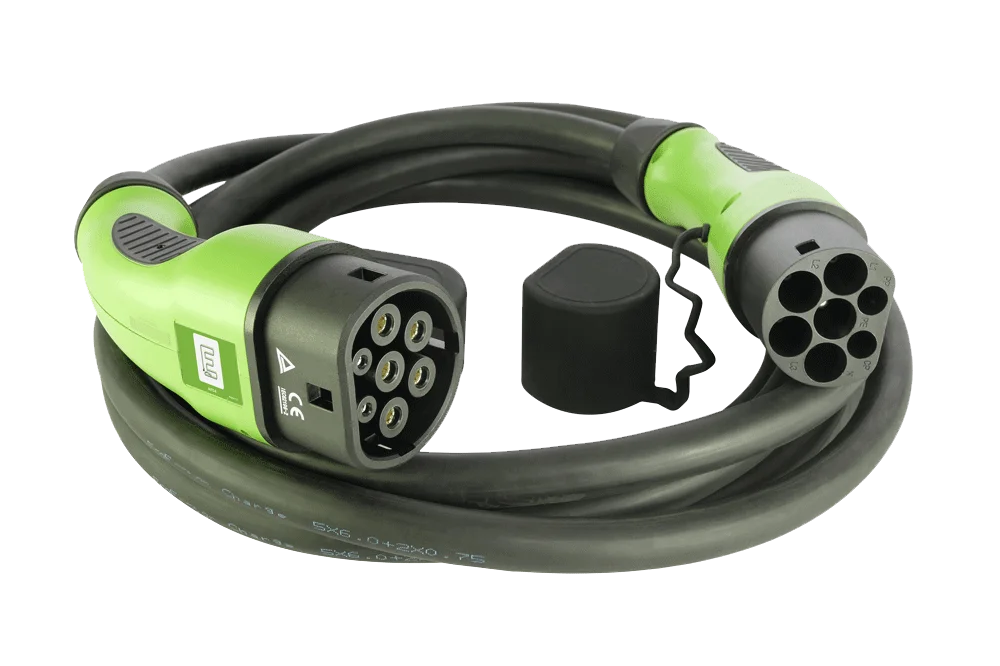
Search this problem and most of the answers you will find are forum threads. That is not a criticism of the people answering them — some of the advice on r/ukelectricians is very good — but it does mean the same wrong idea keeps getting repeated: that a device which trips repeatedly is "faulty" or "too sensitive" and should be replaced with something that holds.
It is almost never faulty. An RCD that trips is doing the one job it was installed to do.
What the RCD is actually measuring
An RCD compares the current flowing out on the live conductor with the current returning on the neutral. In a healthy circuit those match. If they do not, the difference — the residual current — is going somewhere it should not: through the earth conductor, through wet insulation, or through a person.
A domestic RCD trips at around 30 mA, and it does so in well under a second. That threshold is not chosen for the convenience of your charging schedule. It is chosen because it is below the level at which a shock through the chest stops a heart.
So the useful question is never "how do I stop it tripping". It is "where is the leakage coming from".
The Type A / Type B question nearly everyone gets wrong
This is the part the forum threads argue about most and explain least.
An electric vehicle's onboard charger can, under certain fault conditions, produce smooth DC residual current. A standard Type AC or Type A RCD is not designed to detect that, and worse, DC leakage can magnetically saturate the RCD's core so that it stops responding to AC faults as well. In other words the wrong device can be blinded by exactly the fault it is protecting against.
There are two legitimate ways to deal with this, and knowing which one your installation uses explains a great deal:
- A Type B RCD on the charger's circuit, which detects both AC and smooth DC residual current
- A Type A RCD plus 6 mA DC detection built into the charge point itself (usually called an RDC-DD). Most modern wall boxes, ours included, take this route because it is far cheaper than a Type B device and it satisfies the same requirement
Two practical consequences follow. First, if a unit with built-in DC detection starts tripping, the built-in detector itself is a genuine suspect — it is an electronic component and it can fail or become oversensitive with age. Second, never solve a tripping problem by fitting a less sensitive device. If someone offers to swap your RCD for something that "won't be so fussy", they are proposing to remove the protection rather than find the fault.
Causes, roughly in order of how often we find them
1. Water where it should not be
By a wide margin the most common cause. A connector left lying on wet ground, rain driven into an open socket, a cracked enclosure seal, or condensation inside a unit on a north-facing wall. Moisture across the contacts is a leakage path, and it does not need to be visible to be enough.
Damp faults have a signature: they are worse in wet weather, often clear up after a dry spell, and come back. If your tripping follows the forecast, this is where to look.
2. The car, not the charger
A failing onboard charger, a damaged inlet on the vehicle, or water in the car's charge port will trip the house RCD just as readily as a fault in the wall box. The test is simple: if another vehicle charges from your unit without tripping, or if your car trips a different charger elsewhere, you have your answer.
3. Something else on the same circuit
If your charger shares an RCD with the rest of the house — common in older consumer units — the leakage may have nothing to do with the car at all. Every appliance leaks a tiny amount to earth, and the total can sit just under the threshold until the charger's load pushes it over.
A dedicated RCBO for the charger is the correct arrangement, and on a modern installation it is what you should have.
4. A damaged cable
Crushed by a wheel, dragged over a step for two years, chewed, or nicked during another trade's work. Damage to the outer sheath is visible; damage to the insulation underneath often is not, and it will leak once it gets damp.
5. Deteriorated supply insulation
The buried cable feeding the charger can be damaged by later groundworks or degrade at a poorly made joint. This is where an insulation resistance test earns its keep — it is the one part of the diagnosis that genuinely cannot be done by looking.
6. A failing protective device
RCDs are mechanical and they age. One that has been tripping and resetting for months can end up operating below its rated threshold. This is a real cause — but it is the last conclusion to reach, after the others have been excluded, never the first.
7. Solar, battery storage or PEN protection
Charge points with open-PEN protection deliberately disconnect if they detect an abnormal supply voltage, and that can look like a trip to the owner. Inverters and battery systems added after the charger can also alter the earth-leakage picture of the whole installation. If the tripping began within days of other electrical work, that timing is the clue.
Narrowing it down safely
There is a limited amount you can establish yourself, and it is worth doing before anyone attends:
- Does it trip with nothing plugged in? If yes, the fault is in the charger or its supply, not the cable or the car
- Does it trip only once charging starts, or only at a particular power level? Note it
- Is it weather-related? Keep a note of the days it happens
- Does another car charge without tripping? The single most useful test there is
- What exactly tripped — the charger's own internal protection, a dedicated RCBO, or the main RCD covering half the house?
What not to do: do not keep resetting to get one more charge, do not bypass anything, and do not open the charge point. Beyond the consumer unit and a visual inspection, this is work for someone with test equipment — an insulation resistance and RCD trip-time test is not something you can approximate.
Stop and get it looked at if
- It trips more than once
- It trips with nothing connected
- There is any discolouration, melting or scorching in the socket or on the plug
- You can smell hot plastic after a charge
- The unit or the connector is hot rather than warm
- It began after flooding, a storm, or building work
We have photographs of what a charge point looks like after months of being reset instead of repaired in our home EV charger repair guide. The green light was still on.
What a proper diagnosis involves
An engineer should test the supply insulation, measure the actual earth leakage under load, verify the RCD's trip current and trip time against its rating, check the type of protection fitted is correct for an EV circuit, and test the charge point's own DC leakage detection. Then load-test the unit rather than confirming that a light comes on.
We repair charge points of any make. Because we manufacture our own, we work at component level and hold sockets, connectors, protective devices and control components in stock, so a fault found on the visit can often be corrected on the same visit — and depending on the station we can agree a fixed all-in price before starting.
If the tripping is intermittent and weather-related, tell us that when you get in touch. It changes what we test first and it is the detail most people leave out.
Send us a message about your charger
Related: 10 checks before you call an engineer · home EV charging repair · charge point repair service · EV charger maintenance