
Your Charger's Manufacturer Has Gone, or Its Network Is Being Switched Off. You Do Not Have to Throw the Box Away
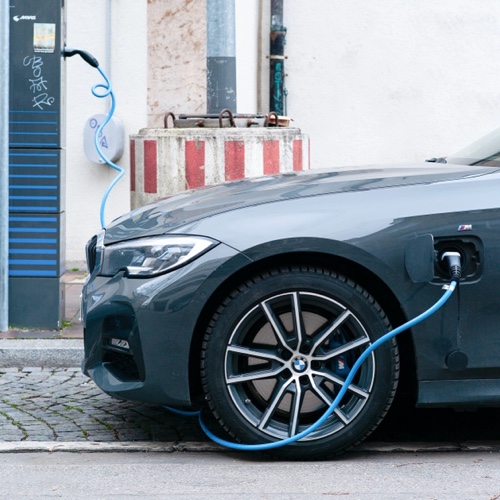
Two things are quietly stranding perfectly good charge points across the UK, and the advice owners are usually given is the same in both cases: buy a new one.
\n\nWe think that advice is wrong most of the time, and we can say so from an unusual position — we build charge points, so we are not limited to repairing what somebody else designed. In a lot of cases the right answer is to keep the box on the wall and change what is inside it.
\n\nProblem one: the networks are being switched off
\n\nPlenty of "smart" chargers never touch your home WiFi. They have a mobile SIM inside — the charger has its own little phone — and that is how it reaches the manufacturer's cloud for scheduling, tariff integration and diagnostics. Sensible design, until the network underneath it closes.
\n\n- \n
- 3G is already gone. EE, Vodafone, Three and O2 have all completed their 3G switch-offs. \n
- 2G goes between 2029 and 2033, according to current government guidance. Individual operators may move earlier than the backstop. \n
This is the same transition that is catching older smart meters, alarm panels and lift phones. Charge points are simply an expensive box, bolted to a wall, with a ten-year service life and a modem inside.
\n\nProblem two: the manufacturer disappears
\n\nEO Charging — trading name of Juuce Limited, and one of the better-known British brands — entered administration in April 2026 with PwC appointed as joint administrators, and was subsequently acquired by Pod. Owners of installed EO units spent months not knowing who stood behind the box on their wall.
\n\nEO is just the example people recognise. The pattern is what matters:
\n\n- \n
- The maker stops trading, or is bought and the old product line quietly stops being supported \n
- Spare parts for a discontinued model are no longer made \n
- The cloud service the charger depends on is switched off, disabling smart functions on hardware that is otherwise perfect \n
- Nobody is writing firmware for a five-year-old model any more \n
What is actually broken here
\n\nAlmost nothing, physically. When a charger loses connectivity it will still charge your car — connectivity drives the clever functions, not the current. What you lose is scheduling, tariff integration, firmware updates, and on a workplace or public site the usage data you bill from.
\n\nLook at what an orphaned charge point actually consists of. The enclosure is fine. The mounting is fine. The buried supply cable — the expensive, disruptive part of any installation — is fine. The socket, the contactor, the protective devices are all serviceable parts. The only thing that has been abandoned is the controller and the service behind it.
\n\nSo replace that.
\n\nKeep the box, change the electronics
\n\nThis is the option most owners are never offered, because most companies working on chargers are installers or service firms. They can fit a new unit or order a spare part from the brand. If the brand is gone, so is their answer.
\n\nWe design and manufacture our own charge point electronics. That means that where a unit is suitable, we can fit our control hardware inside the existing enclosure and bring the charge point back as a supported, current-generation device — with connectivity that is not sitting on a network due to be switched off, and a manufacturer behind it who is still trading.
\n\nWhat that preserves is the part that costs the most:
\n\n- \n
- The supply cable and the civils. No new trench, no new route through the wall, no making good \n
- The consumer unit work, where the existing protective arrangement is correct for an EV circuit \n
- The mounting and the enclosure, which on a well-made unit will outlive several generations of electronics \n
- The wall. Anyone who has had a charger moved knows what a second set of fixings and cable entries looks like \n
And it keeps a working enclosure out of a skip, which matters more than it used to.
\n\nIt also answers the question a replacement is usually bought to answer. A new charger is often chosen for the fresh warranty rather than the hardware, and a repair on an abandoned unit leaves you holding somebody else's orphaned product. A re-equipped charge point comes back as ours: we issue documentation and a warranty covering the electronics we have fitted and the work we have done, and there is a manufacturer still trading behind it.
\n\nWhat it looks like in practice
\n\n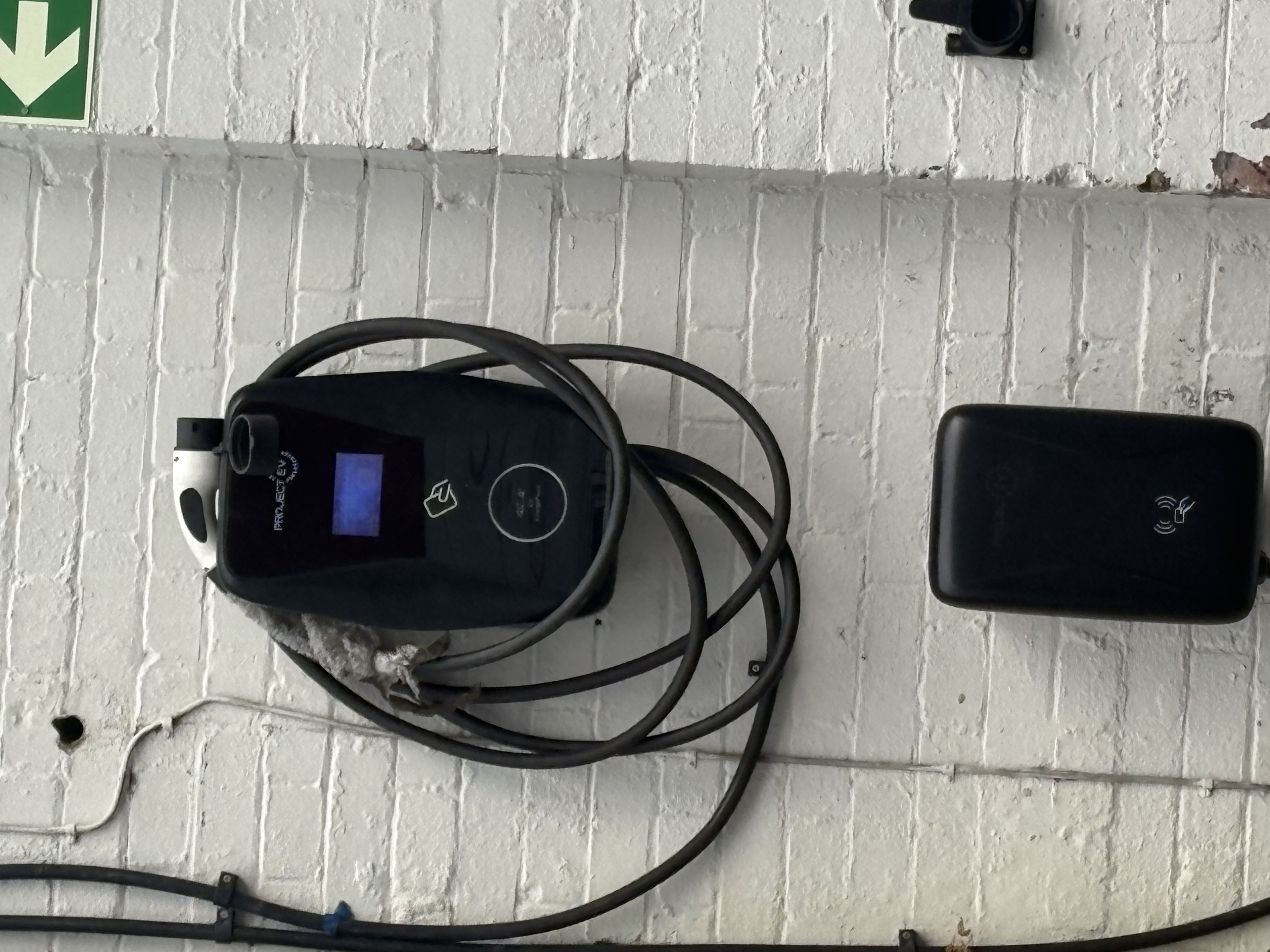
This is a Project EV unit on a commercial wall, photographed after we re-equipped it. It is the same enclosure, in the same place, with the same tethered cable and the same reader beside it. Nothing about the installation changed, and nobody using the car park would know anything had happened to it — which is rather the point.
\n\nThe work took an hour. From the call coming in to the charge point being back in service was four hours.
\n\nCompare that with a replacement: a new unit to specify and order, an installation slot, the old box off the wall, new fixings and cable entries, making good, and a site with a charger out of action in the meantime. On a commercial site that downtime is usually worth more than the hardware.
\n\nWhen this is the right answer
\n\n- \n
- The enclosure and mounting are sound and the supply is in good condition \n
- The unit is orphaned — no parts, no firmware, no cloud, no manufacturer \n
- The connectivity is on a network with a switch-off date \n
- You want the installation to stay where it is, wired the way it is \n
When it is not
\n\nWe will say so rather than take the work:
\n\n- \n
- The enclosure is cracked, corroded or has been letting water in — that is a new unit, not a retrofit \n
- The existing supply is undersized or in poor condition, in which case the cable is the job \n
- The charger is still under a warranty somebody will honour — claim it \n
- A straight replacement genuinely costs less once the £500 EV chargepoint grant is applied, which for some older 3.6 kW units it does - but only if you qualify for it \n
Being straight about the limits
\n\nTwo things nobody can do, and you should be sceptical of anyone who claims otherwise. No independent can resurrect another company's cloud service, and no independent can sign firmware for somebody else's product. If your charger's smart functions live entirely on a server that has been switched off, repairing that hardware will not bring them back.
\n\nThat is precisely why swapping the controller is the honest answer rather than a workaround. You are not trying to revive a dead service — you are replacing the dependency on it.
\n\nHow to find out where you stand
\n\n- \n
- Did you ever give the charger your WiFi password? If not, and it still talks to an app, it almost certainly has a SIM \n
- Check the spec sheet for your model for GSM, GPRS, 2G, 3G, 4G, LTE, LTE-M or NB-IoT. The first three have a deadline \n
- Move your charging schedule into the car as a safety net. Nearly every modern EV can do it, it costs nothing, and it survives whatever happens to the charger's connectivity \n
- On a workplace or public site, put connectivity on the asset register now rather than finding out when billing data stops. Our EV charger maintenance visits include a connectivity check for this reason \n
Age is the crude guide: a unit fitted in the last couple of years is unlikely to be 2G-only; something from the mid-to-late 2010s is worth checking.
\n\nSend us the label
\n\nIf you have an orphaned charger, or one you suspect is on a dying network, send us the make, model and a photograph of the label and the inside of the socket. We will tell you which of the three answers applies to your unit — retrofit, repair, or genuinely replace — including when the answer is that you have nothing to worry about.
\n\nWe repair and re-equip charge points of any make, hold parts in stock, and where the station allows it we can agree a fixed all-in price before starting. The conditions are in our fixed-price repair guide.
\n\nSend us a message about your charger
\n\nRelated: 10 checks before you call an engineer · why your charger keeps tripping the RCD · charge point repair service · EV charger maintenance