
A Charge Point That Works Perfectly and Cannot Be Used
Most of what we are called to is broken. Something has failed, and the job is to find out what and put it back.
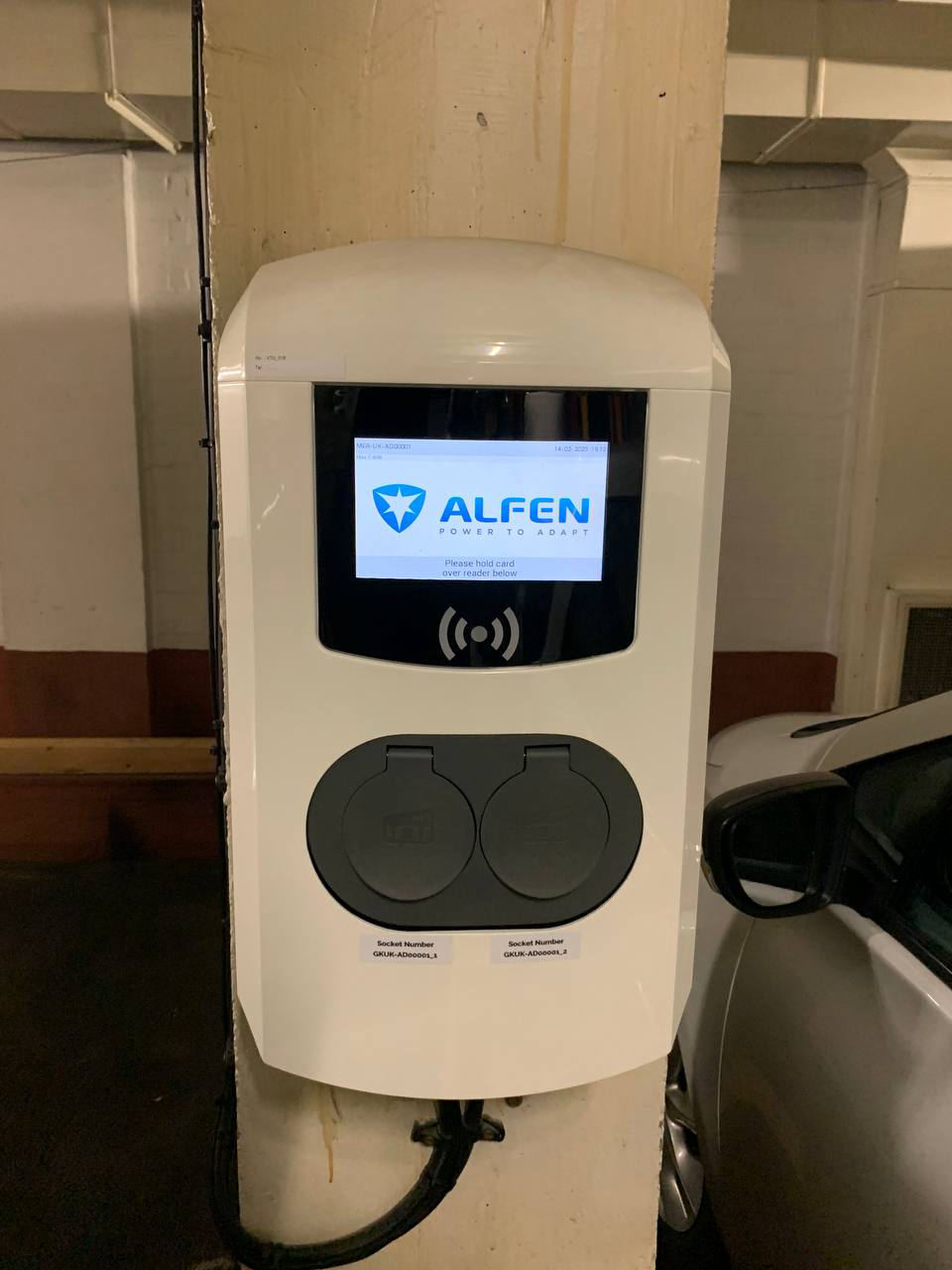
This one was different, and it is the case we think about most often. Nothing was broken. The unit had power. The controller was healthy. The sockets and the cables were fine. And it could not be used, because starting it required credentials that belonged to a company nobody could reach any more.
What was on the wall
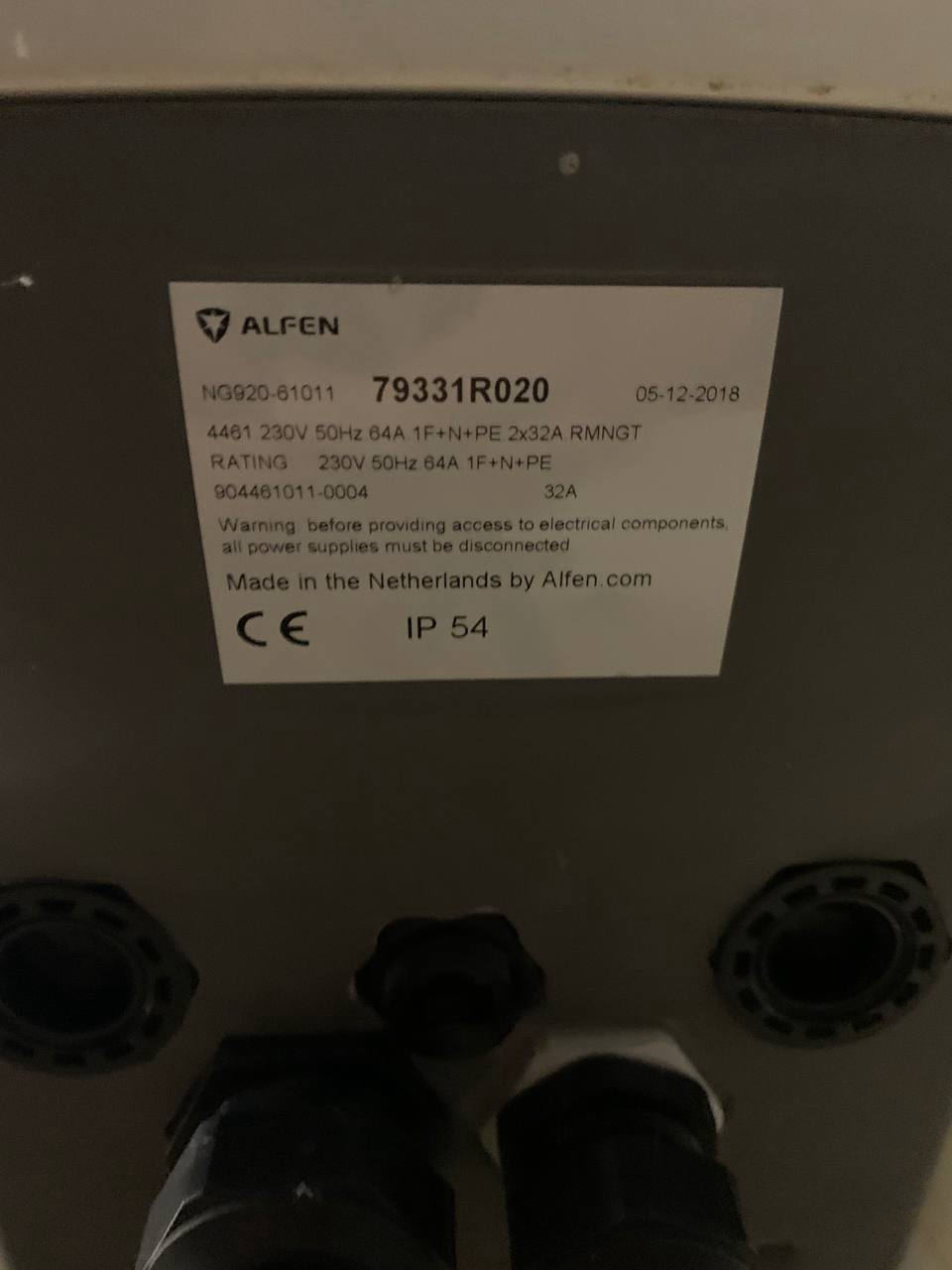
An Alfen Eve Double in an underground car park: two Type 2 sockets, a 64 amp single-phase supply feeding 32 amps to each, IP54, made in the Netherlands. The rating plate is dated 05-12-2018.
The unit had been sold to the site, installed by the company that then serviced it, and a fee was charged for that service. When the contract came to an end, the charge points stayed on the wall and the service did not.
Why a working charger stops being usable
This is the part most owners have never had explained to them, and it is worth understanding whoever made your charge point.
A managed charge point is protected by a password held on the station itself. That is a sensible security decision — a public charge point that any passer-by with a laptop could reconfigure would be a far worse problem than this one. But it means the ability to change anything is a piece of information, and information can be lost.
On this platform the recovery routes are documented by the manufacturer, and every one of them leads back to a company rather than to the owner or to the asset:
- The original password ships on a card in the box, to be handed to the customer at installation. Eight years and several contracts later, very few sites still have it.
- It can be looked up again in the manufacturer's webshop — but that is “only available for the registered Chargepoint Operator”, and the webshop is explicitly not open to end users. An owner is told to contact their operator.
- A self-service reset code exists — but only for units produced after December 2021. A 2018 unit predates it by three years.
- There is a published procedure for transferring service management of a charge point to a new company. Its central clause is that the current operator must agree to it.
Read those together and the gap is obvious. Every route assumes the previous party still exists and will answer. There is no published route for the case where they do not, and that is the case a site owner actually finds themselves in.
To be fair to the manufacturer: this is an absence of published guidance, not a refusal. It is quite possible such cases are handled individually on a support ticket, and if you are in this position it is worth asking. But it is not written down, and you cannot plan around it.
Where the manufacturer's own route ends
Follow the documented troubleshooting to its conclusion and it arrives somewhere expensive. When the passwords are not recognised, the guidance escalates to the webshop, then to changing the password through the operator's back office, and then to raising a service ticket — and states that the situation may almost always lead to replacement of the control board.
That is what happened here. The units went back to the manufacturer, modules were replaced, and they were reconfigured.
And a replacement board does not, by itself, return a charge point to service. Commissioning a new one needs the default or owner password again — from the flyer, or from the webshop, for the registered operator only — along with a station object number that can be entered only once, after which the power settings, load balancing, authorisation and back-office connection all have to be set up from scratch.
So the remedy for a lost password is a hardware replacement, a shipment, and a reconfiguration — on equipment where nothing had failed.
What we did
Some time after that work, one of the units had trouble again at the module connection.
We fitted our own control electronics in place of the original controller. The enclosure stayed on the column, the supply stayed in the wall, the sockets and the protective devices stayed where they were. What went was the dependency.
It runs without a screen, with a status light. There have been no complaints since.
That is not a claim to have outsmarted anybody. It is simply a different answer to the question: rather than recovering access to somebody else's control layer, replace the control layer with one whose owner is the person who owns the building.
The sticker, and why we are not naming anyone
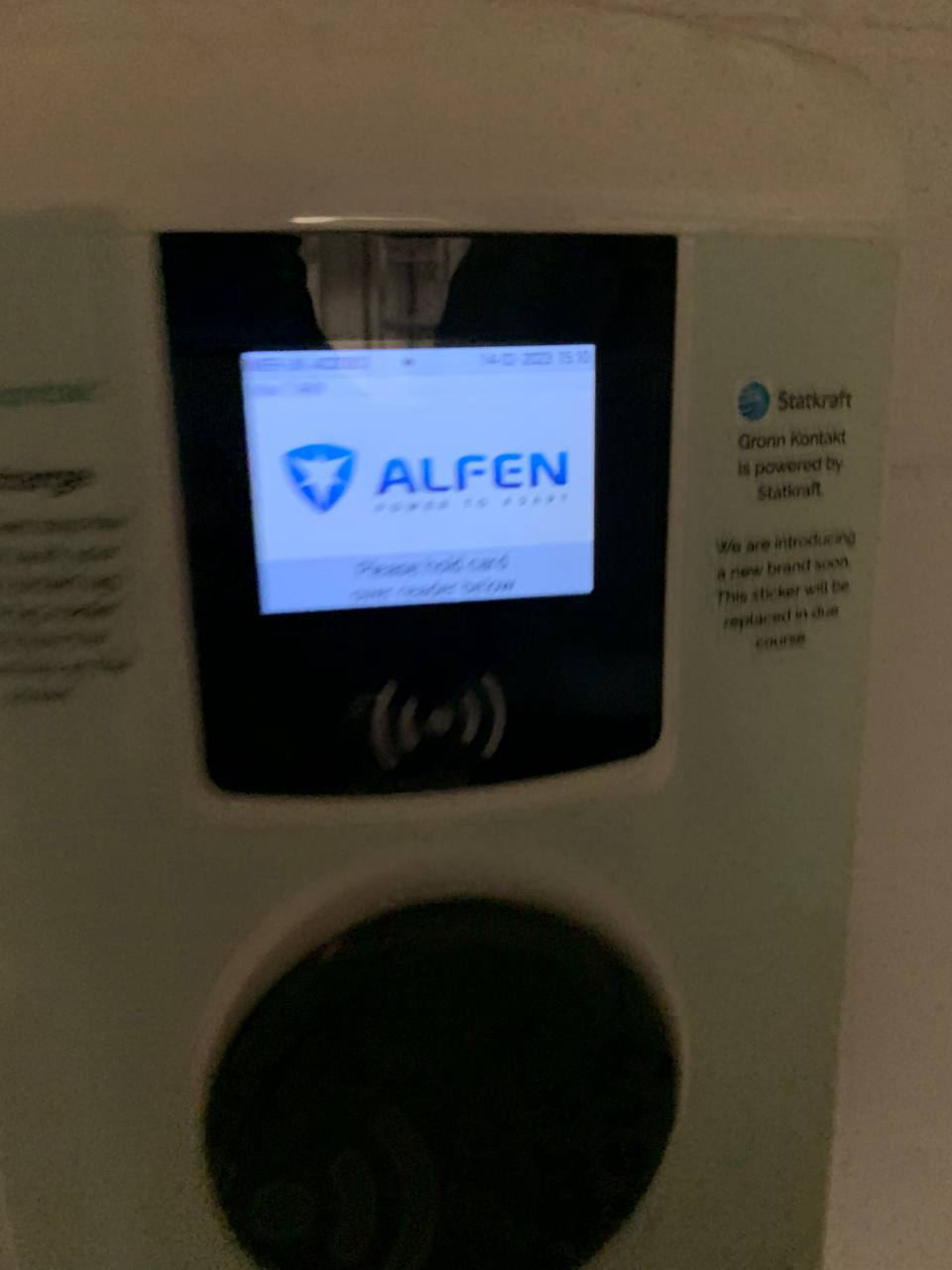
There is a sticker beside the screen announcing that a new brand is coming and that the sticker will be replaced in due course. It never was. The socket labels still carry the initials of an operator that changed its name in April 2021.
We are not going to tell you that some company abandoned this site, because we do not know that and neither does the site. The operator brands in this market have changed hands repeatedly through ordinary commercial activity — that network's UK public charging business was itself sold to another operator in February 2026 — and a site owner can find the party holding their access is no longer the party they contracted with, without anybody having done anything wrong at all.
That is the point. You do not need a company to fail for this to happen to you. A contract ending, a business being sold, or a brand being retired is enough.
What to do now, if you have a managed charge point
This is the useful part, and it costs nothing. Do it while somebody is still answering the phone at the company that manages your charge points.
- Ask for the station password or access credentials in writing, and keep them somewhere that is not one person's inbox. If the original card came in the box at installation, find it and photograph it.
- Write down the make, model, serial and any station or object number for every unit, and keep it with the site's electrical records rather than with the supplier.
- Find out what your contract says about handover. Not the service level — the exit: what you are given, and when, if it ends.
- Ask whether service access is enabled on each unit. On some platforms a manufacturer's engineer cannot log in on site unless that was switched on beforehand, which is a very poor thing to discover on the day.
- If you are commissioning new units, make the handover of credentials part of the acceptance, alongside the certificates. It is the one moment when everybody involved is still present and motivated.
None of that helps once the party is gone. All of it takes an afternoon beforehand.
Being straight about the limits
If your unit is in warranty, or the manufacturer will help you, that is the better route and you should take it. We are not suggesting anyone rip out working electronics to avoid a support ticket.
Nobody — us included — can recover a password we do not have, restore a back office that has been switched off, or write firmware for another manufacturer's product. Re-equipping is not a way around a security measure. It is what is left when the security measure is doing its job perfectly and the key has been lost.
And where the enclosure is damaged, the supply is undersized, or a replacement genuinely costs less, we will say so.
If you have a charge point you cannot control
Send us the make and model, a photograph of the rating plate, and one line on what happens when someone tries to use it. We will tell you honestly whether there is a route back through the manufacturer, whether re-equipping makes sense, or whether the answer is something else entirely.
Send us a message about your charge point
Related: orphaned chargers and the 2G/3G switch-off · when a manufacturer ends support · replacing a failed controller · EV charger maintenance · commercial EV charger repair